
Every meal, every bowl of water, and every chew toy is a chance to protect your dog's teeth — and their heart and organs right along with them. The good news is that you don't need a cabinet full of products or a wrestling match at the sink to make a real difference. A handful of simple, natural habits, added gradually, can keep plaque at bay and freshen your dog's breath. Here's how I'd approach it, and just as importantly, why each piece works.
Start from the inside out, because your dog's mouth is its own microbiome, a living environment of bacteria that tips toward whatever you feed. When the harmful, plaque-building bacteria dominate, they metabolize food debris into acids and sticky biofilm that cling to the teeth and inflame the gums. Keep that balance tilted toward the beneficial bacteria and the mouth stays a far less hospitable place for plaque to form. One of the simplest ways to support that balance is a spoonful of plain, unsweetened milk kefir. Unlike a single-strain probiotic capsule from a jar, kefir is a whole fermented food carrying a broad, living culture of beneficial bacteria. Introduce it and those friendly microbes compete with the harmful strains for space and resources, nudging the pH of the mouth away from the acidic conditions plaque loves. Much of what follows works the same way: protecting that balance, meal by meal.
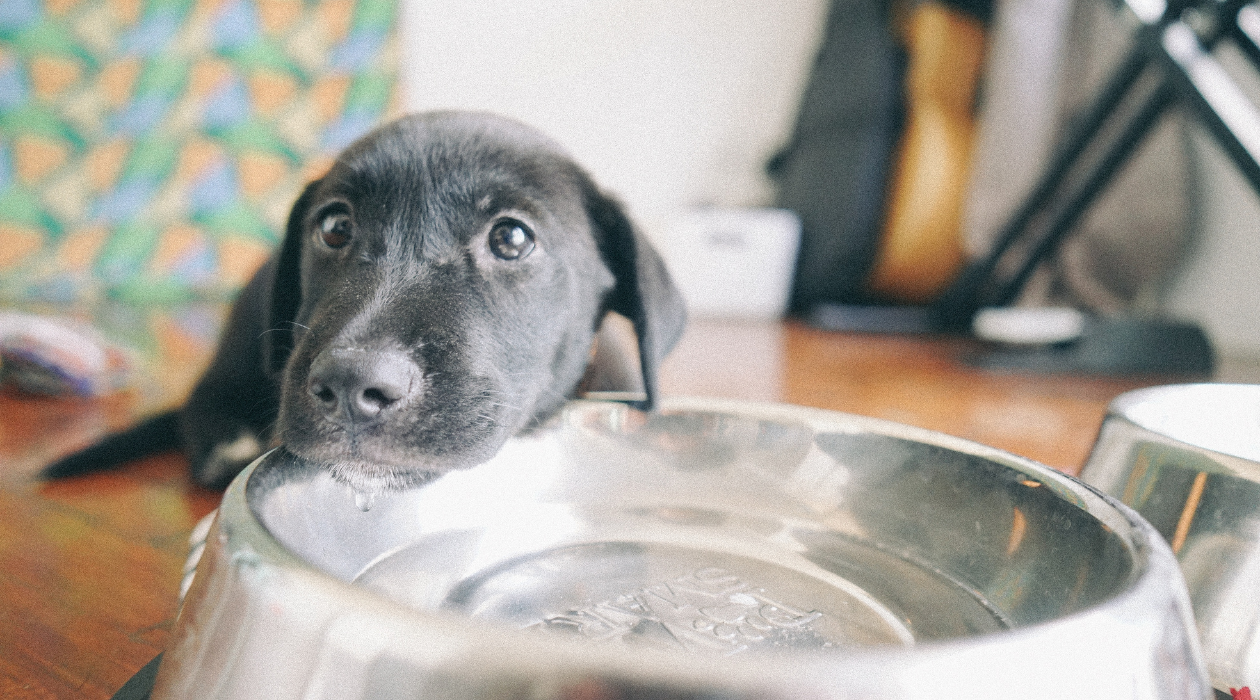
That balance also depends on something almost too simple to mention: wash the water bowl every single day with soap and hot water. A dog's water bowl is one of the germiest things in your home. Backwash and saliva lay down a slick, invisible biofilm on the sides, and that film is a thriving colony of the very bacteria you're trying to keep out of your dog's mouth. Every sip re-seeds their mouth with it. A good daily scrub with hot, soapy water breaks that film down and denies the bad bacteria a permanent home base. It helps to start with the right bowl, too: choose stainless steel, glass or ceramic for both food and water. Other surfaces scratch easily, and every one of those tiny grooves gives biofilm somewhere to hide where scrubbing can't reach. While stainless steel, glass and ceramic wipe truly clean and won't leach anything into your dog's food or water. Be sure to test your stainless steel and ceramic for lead or other contaminants. These provide the support for everything else on this list.
Kelp is my favorite behind-the-scenes helper, and the mechanism is genuinely clever. When your dog digests a quality dried kelp powder, its active compounds are absorbed into the bloodstream and then secreted back out through the salivary glands. That means hours after a meal, your dog's own saliva carries an enzyme that goes to work softening the plaque already on their teeth. It becomes a cleaning agent delivered from the inside. Used daily over a few weeks, many owners find that hardened, yellowish buildup gradually turns soft and simply flakes away during normal chewing. Look for a powder that's 100% Ascophyllum nodosum which is the species used in products marketed specifically as canine supplements. Two things to respect on dosing. First, start with a lesser dose and work up slowly to your dog's recommended amount; the usual dose is 1 gram per 25 pounds of body weight. Second, mind your scoop: the brand I recommend below includes a scoop that holds about 2 grams which is a full dose for a 50-pound dog. Therefore, a full dose for a smaller dog is about half that, not a full, level scoop. Kelp is naturally rich in iodine, check with your vet before starting if your dog has any thyroid condition.
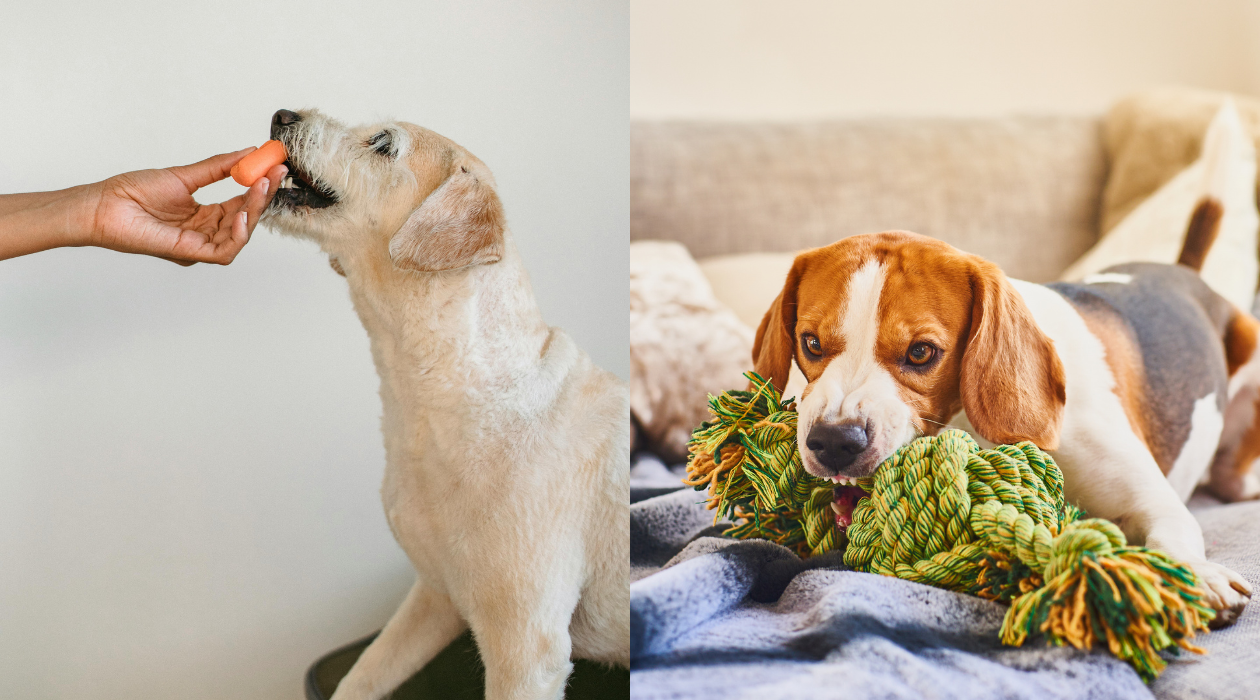
Once the plaque is softened, the satisfying part is letting your dog scrub it off for you. A large raw carrot is a wonderful natural toothbrush. I find the best carrots at my local Farmers’ Market. They are large and sometime oddly shaped which encourages chewing. As your dog bites down, the tough, fibrous flesh physically scrapes soft plaque off the tooth surface while the crunching massages the gum line, and it's low in calories and rich in vitamin A. One safety note: only offer whole carrots to slow, careful chewers. If your dog is a gulper who tries to swallow things whole, skip them or slice the carrot into thin, long ribbons to avoid any choking risk. Similarly, a durable cotton rope toy earns its keep while the individual cotton threads work like dental floss, slipping between the teeth to drag sticky plaque away as your dog gnaws (just supervise so no strings get swallowed). Here's where coconut oil turns a good habit into a great one: smear a little along that rope and your dog will happily work at it for longer, giving themselves a far more thorough cleaning. Coconut oil pulls its weight chemically, too. It's naturally antibacterial, so while your dog is chewing, it's also helping suppress the very bacteria driving plaque in the first place. You don't even need a toy to use it: a little coconut oil on a gauze-wrapped finger, wiped along the teeth and gums, delivers the same antibacterial benefit directly.
Don't overlook chamomile, either. Steep about a teaspoon of dried loose chamomile in a cup of hot water for a full ten minutes, let it cool, and add a little to your dog's food. Chamomile is gently anti-inflammatory, which calms irritated, reddened gums, and mildly antibacterial, giving the harmful bacteria in the mouth one more thing working against them. Adding it to food rather than the water bowl keeps it at full strength rather than diluting it away across the day. It’s a small, easy addition that supports everything else you're doing.
For the most direct approach, there's the ten-second wipe. This is my go-to for dogs who simply will not tolerate a toothbrush. Don't force the brush. Instead, wrap a piece of rough medical gauze around your index finger, dampen it with warm water or a little of that cooled chamomile tea, lift the lip, and swipe once along the outside of the teeth on each side. This works because plaque, before it hardens, is soft and sticky. The rough texture of the gauze catches it and lifts it away, while a smooth cloth would just slide over it. The whole thing takes about ten seconds. The trick to a stress-free experience: let your dog lick a spoonful of dog-safe peanut butter or plain yogurt while you work, so they're far too busy enjoying the treat to notice your finger sliding along their gums.
One principle ties all of this together: go slowly, and add just one or two things at a time. Each of these remedies introduces something new and rich to your dog's system, and a digestive tract that meets kefir, kelp, coconut oil, chamomile, and raw carrot all at the same time will rebel and usually at the least convenient hour. Beyond sparing yourself the mess, easing in lets you actually see what's working. Pick two habits to begin with, run them for a month, look at how your dog's mouth is changing, and only then rotate in something new. Consistency, not intensity, is what clears plaque over time.
A quick word on the limits of all this. These natural remedies are wonderful for preventing plaque and dissolving soft, early buildup but they have a hard stop, and it's important to know where it is. If you look in your dog's mouth and see thick, rock-hard, dark brown or yellow chunks cementing the teeth to the gum line, it’s important to have your vet take a look. That hardened material is calculus, or tartar: it's calcified. Trying to scrape this off at home risks cracking a tooth or tearing the gum instead of removing it. Calculus has to be shattered with an ultrasonic scaler and cleaned away under anesthesia, which is why this is a job for your veterinarian. If your dog is already at that stage, don't feel bad for a moment. Talk to your vet about options. The fact that you're here, reading this, means your dog already has someone genuinely looking out for them.
Recommended Products
Disclosure: This post contains affiliate links. As an Amazon Associate, I earn from qualifying purchases,
which means I may receive a small commission if you buy through the links provided — at no additional cost to you.
I only recommend products I genuinely trust and use.
Kelp powder: Micro Ingredients Organic Kelp Powder 100% Ascophyllum nodosum, non-GMO, easy to mix into food. Dose at 1 gram per 25 pounds of your dog's weight, starting low. This is a good quality and economical as you're paying for the kelp, not the "for dogs" label.
Dried Chamomile: Starwest Botanicals Organic Chamomile Flower or Frontier Co-op Organic German Whole Chamomile Flowers. Both organic and far more economical bought loose in bulk.
Coconut Oil: Dr. Bronner's Organic Virgin Coconut Oil
Ceramic Bowl: These are the bowls I use after testing too many stainless bowls and finding lead.
30oz Ceramic bowls set of 4-8" serving bowls available in 7 colors.
The veterinary information in this article draws on the educational content of Dr. Tony Lee (youtu.be/ViPkkKbfpgQ).
Product recommendations and editorial perspective are my own.